
The Community Spaces Guide to Fire Compliance
For those managing community assets, the challenge is balancing a welcoming, open environment with the strict safety standards required for public assembly.
Whether you are hosting a weekly playgroup, a wedding reception, or a local election, your fire safety must be adaptable and robust.
Speak to an ExpertGeneral advice only. Fire safety law is site-specific. Always consult a qualified Fire Professional to ensure your premises are legally compliant and safe for occupants.
Part 1: Fire Risk Assessment (The Public Safety Duty)
The essential document for venues used by the public.

1. The Multi-Use Community FRA
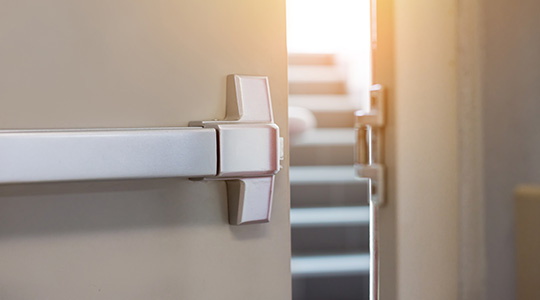
What we check: Maximum safe occupancy levels for different layouts (e.g., "theatre style" vs. "banquet style"), clear signage for visitors, and the accessibility of final exits for those with mobility aids.
The Law: RRFSO 2005. If you hire your hall out to third parties, you must have a valid, documented FRA to ensure their safety and protect your committee from liability.
2. Event Management & Fire Drills
The Requirement: We assess your "Hirer’s Agreement" to ensure that whoever rents the space knows their fire safety responsibilities, where the extinguishers are, and how to lead an evacuation.
Part 2: Fire Strategy (Preserving Heritage & Function)
Essential for renovations, extensions, or modernising older community buildings.

1. Fire Strategy Reports
What it covers: We create bespoke strategies that allow these buildings to remain operational, justifying alternative safety measures where the physical structure cannot be changed (common in listed buildings or heritage places of worship).
The Law: Approved Document B (Volume 2) and BS 9999.

2. Fire Strategy Plans (Drawings)
What they show: Fire-rated doors that protect the main hall, the location of emergency lighting, and "Fire Action Notices" at every entrance.
The Benefit: Having clear drawings makes it much easier to train volunteers and show the Fire Service that you are in control of the building's safety.
Part 3: Fire Engineering (Solving High-Occupancy Challenges)
Advanced modelling for large gatherings and historic architecture.
1. Evacuation Modelling
The Benefit: We use modelling to prove that even with a mix of elderly occupants and young children, your exit routes are wide enough to clear the building in the "Available Safe Egress Time."
This can help you justify higher occupancy numbers for popular events.

2. CFD & Smoke Propagation
What it does: It proves that smoke will "reservoir" in the high ceiling space, staying above head height long enough for people on a mezzanine or balcony to escape.
The Benefit: This can save thousands of pounds by proving that expensive mechanical smoke extraction isn't necessary.

3. Thermal Bridging & Heritage
The Focus: We ensure that adding new insulation or "draft-proofing" doesn't create hidden fire paths or moisture issues that could damage the building's structural fire integrity.
Summary of Community Space Obligations
| Area of Concern | Requirement | Legal Driver |
|---|---|---|
| Daily Operations | General Fire Risk Assessment | RRFSO 2005 |
| Hiring Out the Hall | Hirer’s Fire Safety Briefing | Health & Safety / RRFSO |
| Major Renovations | Fire Strategy Report | Building Regulations |
| Large Public Events | Capacity & Evacuation Plan | Licensing Act / BS 9999 |

Why Choose Master Fire Safety?
We understand that community groups often work with limited budgets and a rotating team of volunteers.
We offer cost-effective, transparent pricing and reports that are jargon-free, making it easy for your committee to take action.
Is your committee fully protected? Contact us today for a professional Community Space Fire Risk Assessment or a review of your Fire Strategy.
Get a Free Quote